

l

De novo CD19 B-ALL: awareness of a rare entity in initial diagnosis
#00066265
Author: Tsigab Hagos; Chen Zhao
Category: Myeloid Neoplasms and acute leukemia (WHO 2016) > Myelodysplastic/myeloproliferative neoplasms (MDS/MPN)
Published Date: 02/19/2026
Category: Myeloid Neoplasms and acute leukemia (WHO 2016) > Myelodysplastic/myeloproliferative neoplasms (MDS/MPN)
Published Date: 02/19/2026
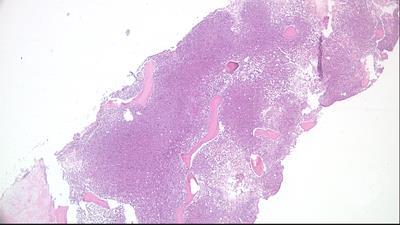
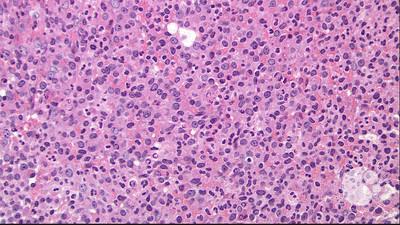
A 29-year-old man presented with back pain, acute kidney injury, and hypercalcemia. Computed tomography imaging revealed numerous osseous lytic lesions and hepatosplenomegaly. Laboratory studies showed mild anemia (hemoglobin level, 12.5 g/dL) and thrombocytopenia (platelet count, 93 × 103/μL), with no evidence of dysplasia or circulating blasts. A bone biopsy from a lytic lesion demonstrated marrow replacement by aggregates of monotonous small- to medium-sized immature cells with scant cytoplasm and round to oval nuclei (panel A, hematoxylin and eosin staining, original magnification ×10; inset, original magnification ×100). The blasts showed strong positivity for PAX5 (panel B, original magnification ×40) and terminal deoxynucleotidyltransferase (TdT; panel C, original magnification ×40) and focal positivity for CD34 (panel D, original magnification ×40), but were negative for CD19 (panel E, original magnification ×40), CD20, CD1a, CD3, CD4, CD7, CD8, CD117, BCL6, and MPO. This immunophenotype (PAX5+/TdT+/CD19−/CD20−) can mimic Merkel cell carcinoma; however, additional studies demonstrated that the blasts are positive for CD10 (panel F, original magnification ×40), CD79a (panel G, original magnification ×40), CD22 (panel H, original magnification ×40, subset, weak), and CD43, but negative for CK20 and neuroendocrine markers (CD56, synaptophysin, and chromogranin), confirming the diagnosis of B-lymphoblastic leukemia/lymphoma. The subsequent bone marrow biopsy showed similar findings, but a dry tap precluded ancillary molecular and cytogenetics studies.
Although CD19− relapse after CART-19 therapy (chimeric antigen receptor T-cell therapy targeting the CD19 antigen) is recognized, de novo CD19−/CD20− B-acute lymphoblastic leukemia (B-ALL) is exceedingly rare, with only a few reported cases. Awareness of this entity is critical for accurate diagnosis, treatment, and measurable residual disease monitoring.
For additional images, visit the ASH Image Bank, a reference and teaching tool that is continually updated with new atlas and case study images. For more information, visit


Related Images: