

l

T-lymphoblastic leukemia/lymphoma with bulky mediastinal involvement
#00066092
Author: David Israel Garrido, MD; Leonel Alvarado, MD. Path; Matilde Sinche, MD
Category: Myeloid Neoplasms and acute leukemia (WHO 2016) > Precursor Lymphoid Neoplasms > T-lymphoblastic leukemia/lymphoma
Published Date: 02/26/2026
Category: Myeloid Neoplasms and acute leukemia (WHO 2016) > Precursor Lymphoid Neoplasms > T-lymphoblastic leukemia/lymphoma
Published Date: 02/26/2026
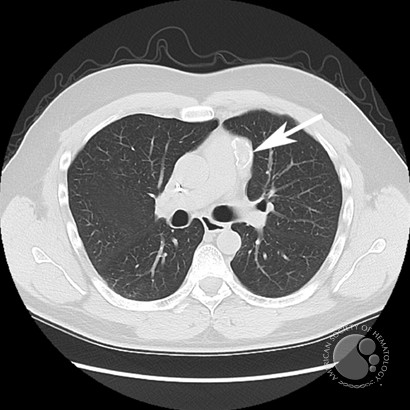
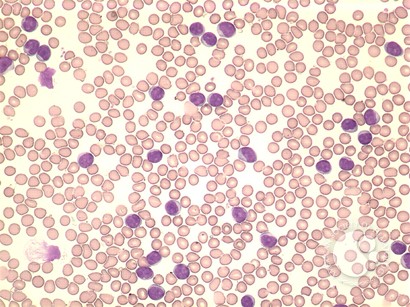
A previously healthy 19-year-old man presented with a 1-month history of dry cough and progressive dyspnea. Chest computed tomography (CT) demonstrated a bulky anterior mediastinal mass with associated cervical and axillary lymphadenopathy, bilateral pleural effusions, and a moderate pericardial effusion (Figure 1A). Initial laboratory evaluation revealed leukocytosis (WBC 23.4 × 10⁹/L), marked absolute lymphocytosis (15 × 10⁹/L), and elevated lactate dehydrogenase (578 U/L). Physical examination showed a firm infra-sternal mass and multiple enlarged peripheral lymph nodes. Given the respiratory compromise and high clinical suspicion of a mediastinal malignancy, an image-guided percutaneous biopsy was performed.
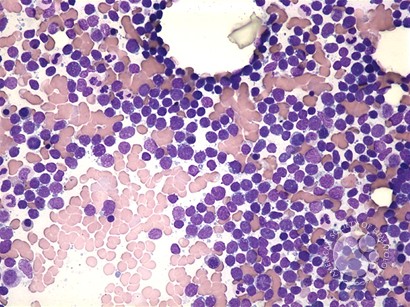
Bone marrow examination demonstrated near-complete replacement of normal hematopoiesis by a massive monomorphic infiltrate of large blasts with a high nuclear-to-cytoplasmic ratio, single-round to oval nuclei with fine chromatin, and prominent nucleoli. The cytoplasm was mildly to moderately basophilic and exhibited elongated “hand-mirror”–type cytoplasmic projections, without granules or conspicuous vacuolization (Figure 1B).
Multicolor flow cytometry of the bone marrow identified 84% T-lineage precursor blasts with the following immunophenotype: CD45⁺ (dim), CD34⁻/⁺ (55%), cyCD3⁺ (bright), smCD3⁺ (dim), CD7⁺ (bright), CD5⁺, CD10⁺, CD1a⁺ (dim), CD99⁺ (bright), TCR αβ⁺ (dim), and negative for CD19, CD79a, cyMPO, CD2, CD4, CD8, TCR γδ, CD117, CD56, CD33, CD13, and CD123. Although heterogeneous, this profile is consistent with an immature pre–T-cell maturational stage (Figure 1C).
The patient is currently receiving intensive multi-agent chemotherapy according to the GATLA protocol.


Related Images: