

l

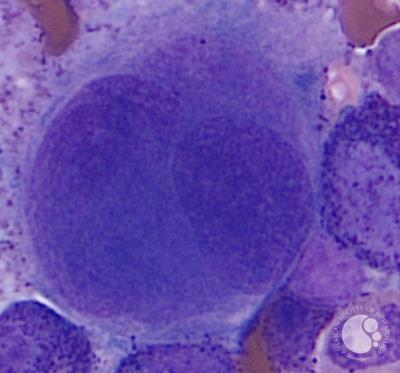
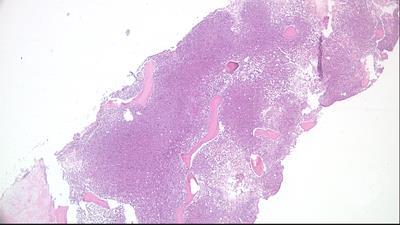
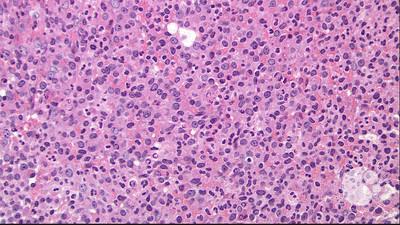
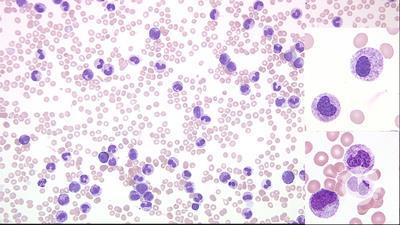
Follicular lymphoma transformed to classic Hodgkin lymphoma
#00066234
Author: Leonard Nsoyori Yenwongfai; Ivo M. B. Francischetti
Category: Myeloid Neoplasms and acute leukemia (WHO 2016) > Myelodysplastic/myeloproliferative neoplasms (MDS/MPN)
Published Date: 02/12/2026
Category: Myeloid Neoplasms and acute leukemia (WHO 2016) > Myelodysplastic/myeloproliferative neoplasms (MDS/MPN)
Published Date: 02/12/2026
A 55-year-old woman presented with small bowel obstruction requiring surgical resection. Hematoxylin and eosin (H&E) staining revealed follicular structures consisting predominantly of atypical small lymphocytes (panel A, magnification ×10), expressing CD20, CD10, BCL6, and BCL2 (panels B-E, respectively, magnification ×10), and classified as classic follicular lymphoma (cFL). Focal areas revealed a diffuse growth pattern (panel F, magnification ×4). There were no CD30-positive Hodgkin/Reed-Sternberg (HRS)–like cells. The patient was managed with a watch-and-wait approach and lost to follow-up. After 10 years, she presented with an extensive lymphadenopathy. A cervical lymph node biopsy revealed pleomorphic cells with HRS morphology (panel G, magnification ×100), interspersed with small lymphocytes and necrosis (not shown). HRS cells expressed CD30, CD15 (subset), PAX5 (dim), MUM1, and were negative for CD20 (panels H-L, respectively, magnification ×40), consistent with classic Hodgkin lymphoma (cHL), Epstein-Barr virus negative. A subset of HRS cells aberrantly expressed CD2 and CD4. There was no morphologic evidence of cFL. Polymerase chain reaction result revealed IgH gene rearrangements with identical amplification products (323, 258, 116 bp) in both FL and cHL, confirming their clonal relationship. T-cell receptor gamma gene rearrangement was polyclonal, excluding ALK-negative anaplastic large cell lymphoma. Fluorescence in situ hybridization was positive for 3 to 4 copy gains of BCL2, BCL6, and MYC, without rearrangements. Next-generation sequencing (second biopsy) revealed variants often found in cFL and cHL, including
This case exemplifies a rare sequential transformation of cFL to cHL. The patient was ineligible for chemotherapy due to comorbidities and was referred to hospice care.
For additional images, visit the ASH Image Bank, a reference and teaching tool that is continually updated with new atlas and case study images. For more information, visit


Related Images: