

l

CD25 mast cell hyperplasia in myeloid/lymphoid neoplasm with PDGFRA rearrangement mimicking systemic mastocytosis
#00066295
Author: Beenu Thakral; Sanam Loghavi
Category: Myeloid Neoplasms and acute leukemia (WHO 2016) > Myelodysplastic/myeloproliferative neoplasms (MDS/MPN)
Published Date: 03/20/2026
Category: Myeloid Neoplasms and acute leukemia (WHO 2016) > Myelodysplastic/myeloproliferative neoplasms (MDS/MPN)
Published Date: 03/20/2026
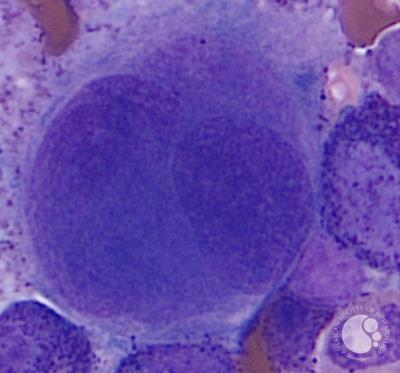
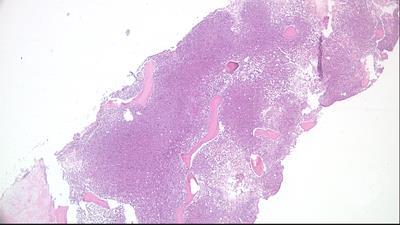
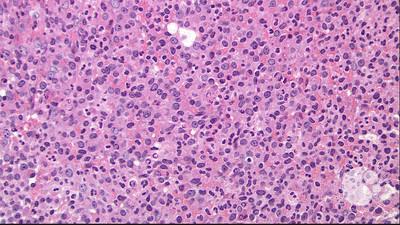
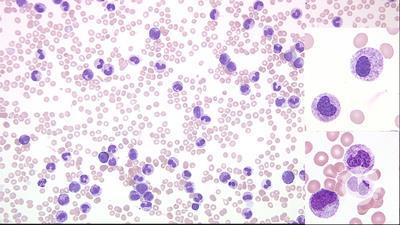
A 72-year-old man presented with mild anemia and leukocytosis (white blood cell count, 15 × 109/L) with eosinophilia (78%; absolute eosinophil count, 11.7 × 10⁹/L) (panel A, Wright-Giemsa stain, 20× lens objective). A bone marrow biopsy showed that the bone marrow was hypercellular (∼95%) with myeloid hyperplasia and prominent eosinophilia (panel B, hematoxylin and eosin [H&E] staining, 20× lens objective; panel C, H&E staining, 40× lens objective) accompanied by a paratrabecular proliferation of spindled mast cells (panel D, Giemsa stain, 100× lens objective), highlighted by CD117 immunostain with aberrant CD25 expression (panels E and F, respectively; 20× lens objective) without the expression of CD2 and CD30. Next-generation sequencing (assay sensitivity of 1%-2%) did not identify mutations, including
This interesting case illustrates an exuberant mast cell proliferation with aberrant CD25 expression in the setting of a myeloid/lymphoid neoplasm with
For additional images, visit the ASH Image Bank, a reference and teaching tool that is continually updated with new atlas and case study images. For more information, visit


Related Images: