

l

Pediatric acute erythroid leukemia with NUP98::KDM5A fusion
#00066327
Author: Karen Dermer; Aida I. Richardson
Category: Myeloid Neoplasms and acute leukemia (WHO 2016) > Myelodysplastic/myeloproliferative neoplasms (MDS/MPN)
Published Date: 03/26/2026
Category: Myeloid Neoplasms and acute leukemia (WHO 2016) > Myelodysplastic/myeloproliferative neoplasms (MDS/MPN)
Published Date: 03/26/2026
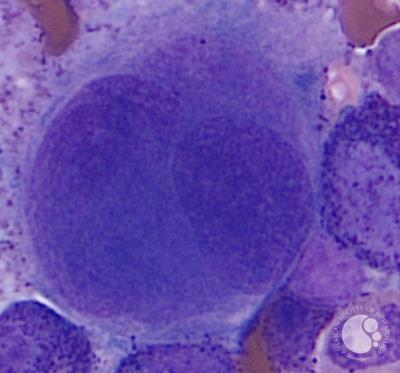
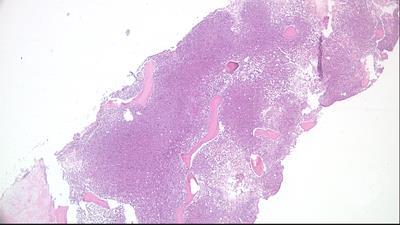
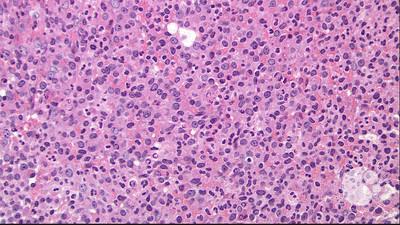
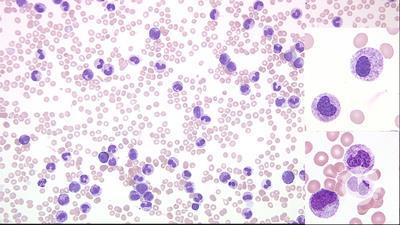
A 2-year-old female presented with bruising and petechiae, with pancytopenia (hemoglobin, 9.0 g/dL; absolute neutrophil count, 0.8 × 10⁹/L; platelets 10 × 109/L) and rare, atypical cells on a peripheral blood smear (panel A, 100× objective, Wright-Giemsa stain). However, flow cytometry did not reveal an abnormal population. A bone marrow aspirate and core biopsy were hypercellular (∼90%-95%) with a predominance of erythroid cells (∼80%), including proerythroblasts (∼23%-35%), as confirmed by CD71 and E-cadherin immunohistochemical stains (panels B-E, 40× objective). Flow cytometry of the bone marrow aspirate identified erythroid precursors that expressed CD45 (dim), CD33, CD36, CD38, CD117, CD71, and HLA-DR. Cytogenetic analysis revealed an abnormal female karyotype, specifically clone 1 48,XX,der(1)add(1)(p36.3)add(1)(q12),del(3)(q12q29),add(9)(q22),add(11)(p14),der(12)t(1;12)(q11.2;p13),del(13)(q14q32),+19,+21[9]/normal 46,XX[11]. Fluorescence in situ hybridization detected a
The patient was diagnosed with acute erythroid leukemia (AEL), a rare subtype of acute myeloid leukemia (AML) defined by erythroid differentiation. The patient is in remission at 18 months after induction chemotherapy and a consolidative allogeneic stem cell transplant. AEL is rare in adult patients but exceedingly rarer in children. AML with
For additional images, visit the ASH Image Bank, a reference and teaching tool that is continually updated with new atlas and case study images. For more information, visit


Related Images: