

l

A WHIM of the marrow: myelokathexis as a cytological clue to a rare blood disorder
#00066337
Author: Akhil Behringer; Christoph Schliemann
Category: Myeloid Neoplasms and acute leukemia (WHO 2016) > Myelodysplastic/myeloproliferative neoplasms (MDS/MPN)
Published Date: 03/20/2026
Category: Myeloid Neoplasms and acute leukemia (WHO 2016) > Myelodysplastic/myeloproliferative neoplasms (MDS/MPN)
Published Date: 03/20/2026
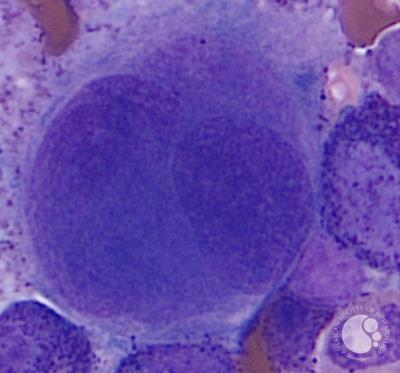
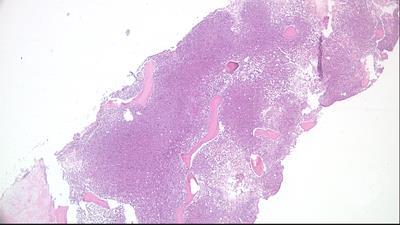
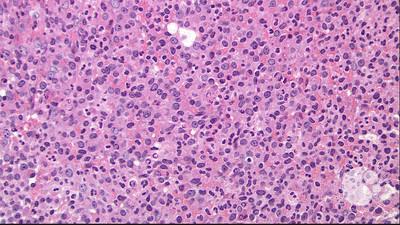
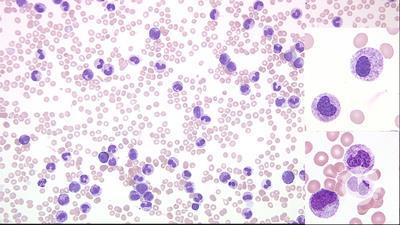
A 57-year-old man presented with fever, swelling, and erythema of the left lower leg consistent with bacterial cellulitis, for which antibiotic therapy was initiated. Peripheral blood examination showed a leukocyte count of 1.09 × 10⁹/L with a neutrophil count of 0.13 × 10⁹/L. His medical history included lifelong neutropenia, but despite repeated evaluations, no definitive diagnosis had ever been established. Bone marrow aspiration revealed hypercellularity with myeloid hyperplasia and numerous mature granulocytes exhibiting abnormally long, filamentous intersegmental chromatin strands without overt hyperlobulation (panel A, original magnification ×630; panel B, original magnification ×1000; May-Grünwald Giemsa stain). Megakaryopoiesis and erythropoiesis appeared normal. Molecular testing for myelodysplastic neoplasm-associated genetic abnormalities was negative. Given the combination of peripheral neutropenia and distinctive granulocytic morphology, WHIM (warts, hypogammaglobulinemia, infections, and myelokathexis) syndrome was suspected. The patient reported recurrent bacterial infections but had no warts and normal immunoglobulin levels. Subsequent genetic testing confirmed a heterozygous nonsense mutation (c.1000C>T; p.Arg334∗) in the C-X-C chemokine receptor 4 (
WHIM syndrome is a rare congenital immunodeficiency caused by gain-of-function
For additional images, visit the ASH Image Bank, a reference and teaching tool that is continually updated with new atlas and case study images. For more information, visit


Related Images: