

l

Myelodysplastic CMML-1 mimicking ITP, unmasked by corticosteroids: evolution from clonal monocytosis
#00066378
Author: Zhaodong Xu; Monika Hudoba
Category: Myeloid Neoplasms and acute leukemia (WHO 2016) > Myelodysplastic/myeloproliferative neoplasms (MDS/MPN)
Published Date: 03/26/2026
Category: Myeloid Neoplasms and acute leukemia (WHO 2016) > Myelodysplastic/myeloproliferative neoplasms (MDS/MPN)
Published Date: 03/26/2026
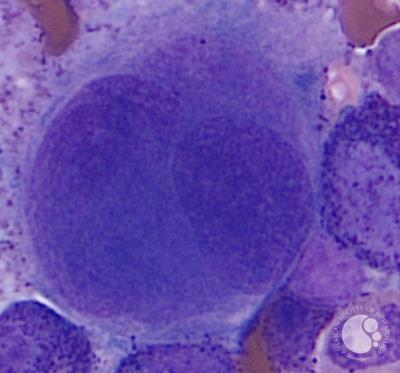
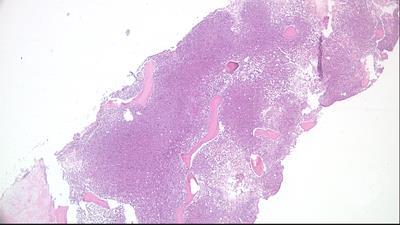
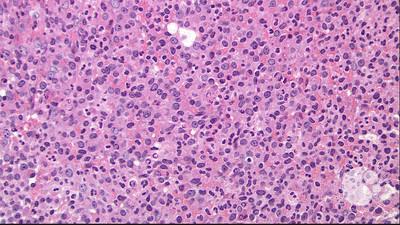
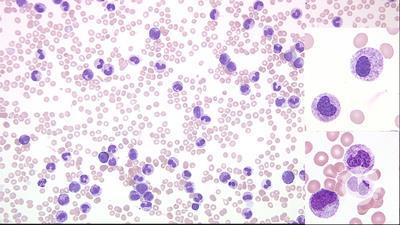
A 68-year-old woman was admitted with isolated thrombocytopenia (platelets 16 × 109/L), normal hemoglobin/white blood cell (WBC) results without dysplasia, and monocytosis (1.8 × 10⁹/L) (panel A, Wright-Giemsa stain, original magnification ×100). She was diagnosed with having immune thrombocytopenia (ITP) and treated with IV immunoglobulin/corticosteroids without response. Within 4 days, she developed leukocytosis (WBC, 26.6 × 10⁹/L), monocytosis (3.2 × 10⁹/L), <1% blasts, no monoblasts/promonocytes, but dysplastic granulocytes in the peripheral blood (panel B, Wright-Giemsa stain, original magnification ×100). The marrow was hypercellular with granulocytic hyperplasia/dysplasia, megakaryocytic hyperplasia/dysplasia, and 9% blasts (myeloblasts/monoblasts/promonocytes) (panel C; May-Grünwald Giemsa stain, original magnification ×100). Flow cytometry revealed 7% CD34+ myeloblasts, 2% promonocytes (red arrow)/7% monocytes (black arrow) with CD34−/CD11b+/aberrant CD56+/dimHLA-DR+ (panel D), confirmed by biopsy/CD34 (panel E; hematoxylin and eosin stain, original magnification ×50). Retrospective review revealed persistent monocytosis (>0.5 × 10⁹/L; >10% WBC) since 2018 despite no cytopenia/dysplasia (panel F), raising suspicion for antecedent clonal monocytosis of undetermined significance (International Consensus Classification [ICC] criteria), the chronic myelomonocytic leukemia (CMML) precursor. Results of cytogenetics/optical genome mapping were normal. Next-generation sequencing revealed ASXL1:c.1934dup;p.Gly646TrpfsTer12 (variant allele frequency [VAF], 39.6%)/U2AF1:c.470A>G;p.Gln157Arg (VAF, 45.8%)/RUNX1:c.844dup;p.Asp282GlyfsTer318 (VAF, 40%). MDS-IB1/RUNX1-familial platelet disorder was excluded. A diagnosis of myelodysplastic CMML-1, rather than myeloproliferative, was rendered (fifth edition of the World Health Organization Classification of Haematolymphoid Tumours/ICC criteria), because the transient WBC >13 × 109/L reflected corticosteroid-induced mobilization of myeloid cells, unmasking insidious CMML-1. Lacking platelet response/megakaryocytic hyperplasia/dysplasia indicated ineffective thrombopoiesis rather than true ITP.
Comutations of ASXL1/RUNX1/U2AF1 in CMML are associated with adverse prognosis. U2AF1 mutations occur frequently in myelodysplastic CMML. This case underscores the importance of vigilant retrospective review of complete blood counts/smear morphology before diagnosing ITP in patients with persistent monocytosis (>0.5 × 10⁹/L; >10% WBC).
For additional images, visit the ASH Image Bank, a reference and teaching tool that is continually updated with new atlas and case study images. For more information, visit


Related Images: