

l

B-lymphoblastic leukemia with synchronous KMT2A::TXNRD1 and IGH::CEBPD rearrangements
#00066456
Author: Yan Li; Haigang Shao
Category: Myeloid Neoplasms and acute leukemia (WHO 2016) > Myelodysplastic/myeloproliferative neoplasms (MDS/MPN)
Published Date: 04/26/2026
Category: Myeloid Neoplasms and acute leukemia (WHO 2016) > Myelodysplastic/myeloproliferative neoplasms (MDS/MPN)
Published Date: 04/26/2026
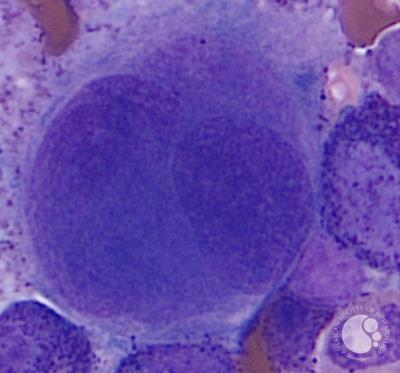
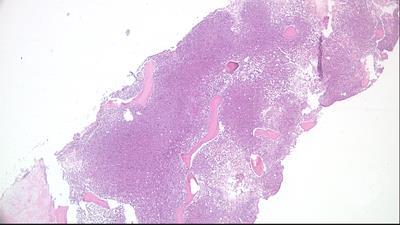
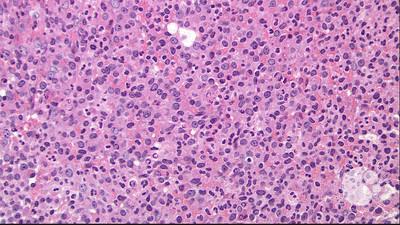
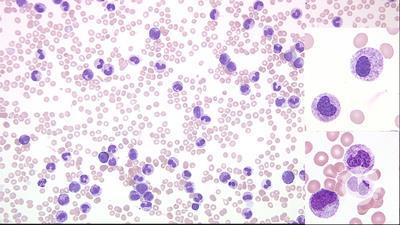
A 55-year-old woman presented with a 2-week history of fatigue. A complete blood count showed a white blood cell count of 1.97 × 10⁹/L with 98% blasts; hemoglobin concentration, 58 g/L, and platelet count, 21 × 109/L. Bone marrow aspiration showed 98% blasts (panel A; Wright-Giemsa stain, 100× objective); cytochemistry showed negative myeloperoxidase. Flow cytometry demonstrated that the blasts were positive for CD9, CD19, CD22, CD24, CD34, CD38, CD58 (dim), cytoCD79a, CD99, HLA-DR, and terminal deoxynucleotidyltransferase (panel B). Karyotyping revealed 47,XX,+X,t(8;14)(q11;q32),t(11;12)(q23;q23)[9]/46,XX[1] (panel C). Fluorescence in situ hybridization (FISH) confirmed
Although
For additional images, visit the ASH Image Bank, a reference and teaching tool that is continually updated with new atlas and case study images. For more information, visit


Related Images: