

Advertisement intended for health care professionals

l

NPM1-mutated acute myeloid leukemia with a hybrid granulocytic and monocytic phenotype

NPM1-mutated acute myeloid leukemia with a hybrid granulocytic and monocytic phenotype
#00066457
Author: Wei Wang; Hong Fang
Category: Myeloid Neoplasms and acute leukemia (WHO 2016) > Myelodysplastic/myeloproliferative neoplasms (MDS/MPN)
Published Date: 04/26/2026

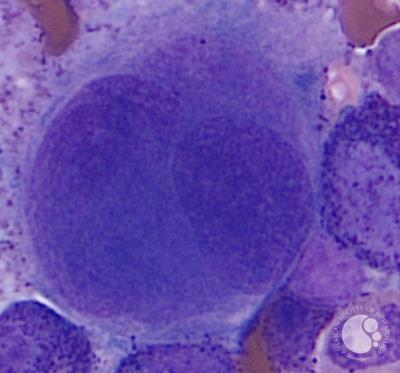
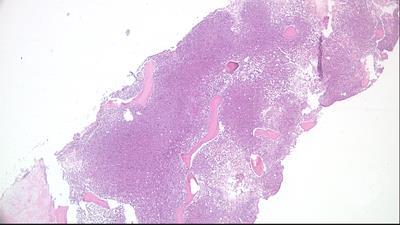
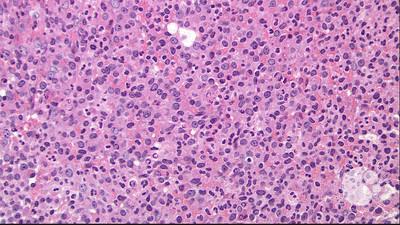
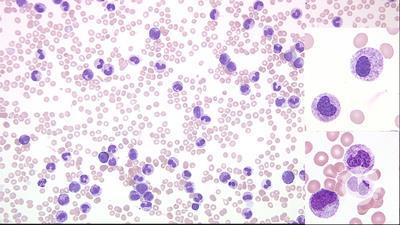
A 78-year-old man was diagnosed with refractory NPM1-mutated acute myeloid leukemia (AML) with FLT3-internal tandem duplication. A bone marrow smear (panel A, Wright-Giemsa stain, 100× objective) revealed 75% large round blasts with dispersed chromatin, frequent eosinophilic granules and cytoplasmic blebs. Blasts were positive for butyrate esterase (panel B, 100× objective) and myeloperoxidase (panel C, 100× objective). Flow cytometric analysis (panel D) shows they are in the granulocytic region on the CD45/SSC plot. They expressed CD4 (partial), CD13 (partial), CD15, CD33, and CD64, while lacking CD34, CD117, CD123, and HLA-DR. This demonstrates a significant immunophenotypic shift from the pretreatment blasts, which were positive for CD117 and CD123, and negative for CD64. Assigning lineage (monocytic or granulocytic/myeloid) for this AML is challenging. Strong butyrate esterase activity, positive CD4, and bright CD33 and CD64 expression support a monocytic phenotype. Conversely, strong myeloperoxidase and CD15 expression along with the absence of CD123 and HLA-DR expression favors a granulocytic lineage. Taken together, the findings indicate a highly unusual hybrid phenotype with overlapping granulocytic and monocytic features. The blasts may be overlooked on flow cytometry because they do not fall within the traditional blast gate (panel D).

In classic acute myelomonocytic leukemia (AMML) cases, blasts, granulocytes, and monocytes represent 3 distinct populations, each ≥20%. This rare AMML case features a single blast population with a hybrid granulocytic/monocytic immunophenotype. It is crucial to recognize this for accurate diagnosis and treatment planning.

For additional images, visit the ASH Image Bank, a reference and teaching tool that is continually updated with new atlas and case study images. For more information, visit https://imagebank.hematology.org.

Advertisement intended for health care professionals