

l

Dissecting the genetic threads underlying the fabric of pediatric myelofibrosis
#00066468
Author: Zubaidah Al-Jumaili; Xenia Parisi
Category: Myeloid Neoplasms and acute leukemia (WHO 2016) > Myelodysplastic/myeloproliferative neoplasms (MDS/MPN)
Published Date: 05/12/2026
Category: Myeloid Neoplasms and acute leukemia (WHO 2016) > Myelodysplastic/myeloproliferative neoplasms (MDS/MPN)
Published Date: 05/12/2026
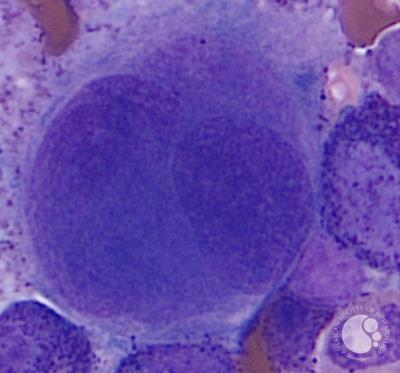
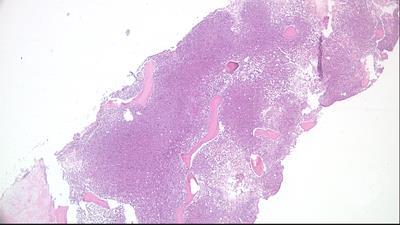
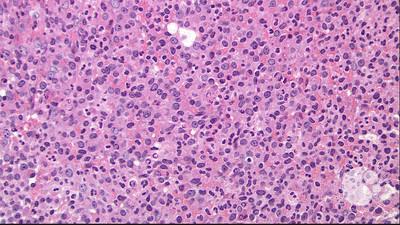
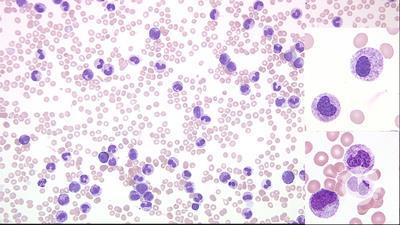
A 12-year-old girl with persistent bone pains, muscle weakness, and severe thrombocytopenia presented to hematology with a negative autoimmune workup. Recent complete blood count revealed a leukocyte count of 11.89 × 10⁹/L, hemoglobin of 10.6 g/dL, and a platelet count of 40 × 109/L, with 2.9% immature granulocytes. Peripheral smear demonstrated normocytic, normochromic anemia, rare dacrocytes (panel A, Giemsa-Wright stain; original magnification ×1000). Bone marrow biopsy showed >95% cellularity with orderly granulopoiesis and erythropoiesis and a myeloid-to-erythroid ratio of 4:1. Megakaryocytes were markedly increased, showing a spectrum of cytomorphology, forming frequent, variably tight clusters (panel B-C, hematoxylin and eosin stain, original magnification ×100; panel D, CD61, original magnification ×200). A diffuse increase in type 3 collagen fibers with frequent dense, intersecting fibers and coarse bundles was seen (panel E, original magnification ×100; panel F, original magnification ×200). CD20 (panel G, original magnification ×200) and CD3 (panel H, original magnification ×200) highlighted increased interstitial B- and T-lymphocytes, respectively. Flow cytometry showed no abnormal populations. The patient was diagnosed with World Health Organization grade MF-2 myelofibrosis. Following additional workup for infectious and metabolic disorders, genetic testing was pursued. Microarray analysis identified a 15.3-Mbp region copy-neutral loss of heterozygosity on 6p22.2–p21.1, encompassing
This case demonstrates the high level of clinical suspicion required to identify pediatric cases of primary myelofibrotic conditions.
For additional images, visit the ASH Image Bank, a reference and teaching tool that is continually updated with new atlas and case study images. For more information, visit


Related Images: