

Advertisement intended for health care professionals

l

Morphologic and flow cytometric features of menin inhibitor–induced pseudoprogression in KMT2A-rearranged acute myeloid leukemia

Morphologic and flow cytometric features of menin inhibitor–induced pseudoprogression in KMT2A-rearranged acute myeloid leukemia
#00066510
Author: Sarah R. Helman; Aaron J. Stonestrom
Category: Myeloid Neoplasms and acute leukemia (WHO 2016) > Myelodysplastic/myeloproliferative neoplasms (MDS/MPN)
Published Date: 06/02/2026

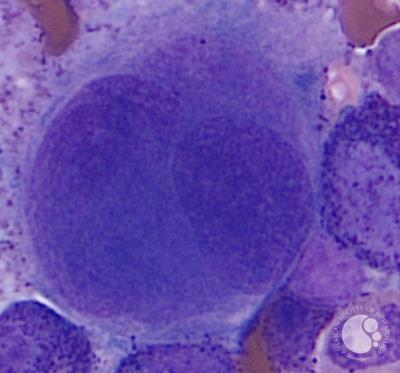
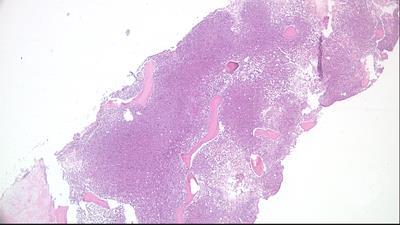
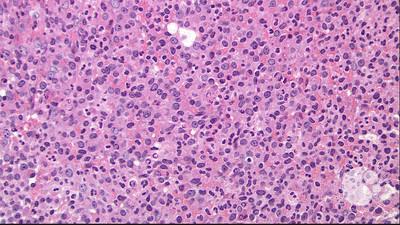
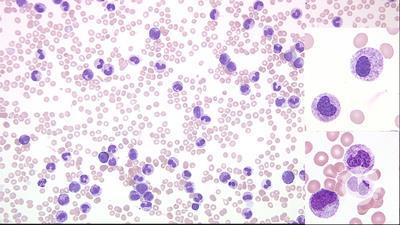
A 28-year-old woman presented with leukocytosis. Bone marrow aspirate revealed 79% blasts with variable size, deep blue cytoplasm, and occasional vacuoles (panel A, Wright-Giemsa stain, 60× objective). Flow cytometry revealed monocytic differentiation with aberrant CD7 (panel B). Karyotype was 45,XX,t(6;11)(q27;q23),-7[6]/55,XX,+2,+4,+6,t(6;11)(q27;q23),+8,+12,+13,+17,+20,+21[4]; fluorescence in situ hybridization identified KMT2A rearrangement (panels C and D); and targeted sequencing confirmed KMT2A-MLLT4 gene fusion. The patient was treated with intensive “7+3” cytarabine and daunorubicin on treatment days 1 to 7 together with menin inhibitor therapy on days 2 to 28. On day 14, bone marrow aspirate revealed 5% to 9% large cells with immature nuclei and dyssynchronous increased cytoplasm with variable vacuolization and small pseudopod-like extensions (panel E, Wright-Giemsa stain, 60× objective). Contemporaneous flow cytometry revealed <1% myeloid blasts without aberrant markers (panel F). Automated peripheral blood count differential reported a rising “blast” fraction beginning on treatment day 13, peaking at 20% to 28% of peripheral leukocytes on day 18 and waning in the following 6 days. Morphologic peripheral blood review identified cells with immature chromatin resembling monoblasts/promonocytes but variably mature features, including ample gray-blue cytoplasm, granules, and pseudopods (panel G, Wright-Giemsa stain, 100× objective). Postinduction bone marrow revealed no evidence of leukemia by morphology, flow cytometry, or cytogenetics. The patient underwent allogeneic hematopoietic stem cell transplantation in first remission.

Response to menin inhibition may mimic progression by inducing peripheral mobilization of immature cells with atypical morphology, including nuclear-cytoplasmic dyssynchrony.

For additional images, visit the ASH Image Bank, a reference and teaching tool that is continually updated with new atlas and case study images. For more information, visit https://imagebank.hematology.org.

Advertisement intended for health care professionals