

l

Shrouded in a starry sky: a case of AML-MRC with KMT2A amplification mimicking Burkitt-like morphology
#00066533
Author: Radu Chiriac; Vincent Alcazer
Category: Myeloid Neoplasms and acute leukemia (WHO 2016) > Myelodysplastic/myeloproliferative neoplasms (MDS/MPN)
Published Date: 06/06/2026
Category: Myeloid Neoplasms and acute leukemia (WHO 2016) > Myelodysplastic/myeloproliferative neoplasms (MDS/MPN)
Published Date: 06/06/2026
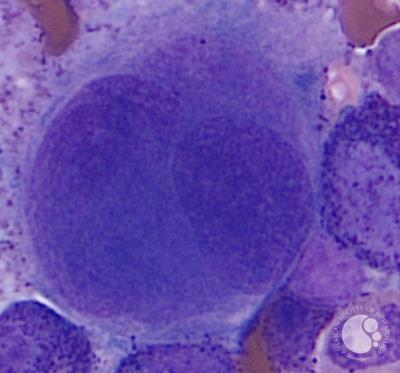
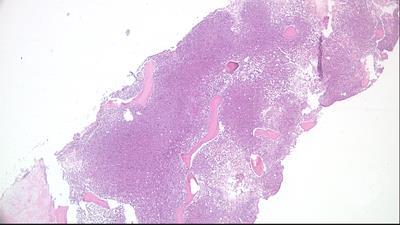
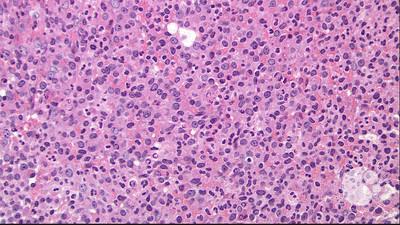
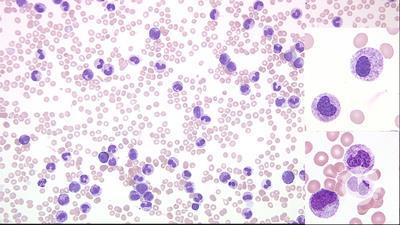
A 77-year-old woman presented with symptomatic anemia (hemoglobin, 66 g/L) and 10% circulating medium-to-large blasts with high nuclear-to-cytoplasmic ratios, prominent nucleoli, intensely basophilic cytoplasm, and punched-out vacuoles, resembling Burkitt-like cells (panel A; May-Grünwald Giemsa [MGG] stain, 50× objective). Bone marrow aspirate demonstrated 70% blasts with a striking starry-sky appearance (panel B; MGG stain, 20× objective). Flow cytometry identified CD34+ blasts expressing CD13, CD33, CD117, CD15, and HLA-DR, with absent myeloperoxidase and no surface or cytoplasmic CD3, CD19, or CD79a. Cytogenetic analysis revealed a complex monosomal karyotype, including monosomies of chromosomes 3 and 11; trisomy 6; interstitial deletions of 5q and 15q; and a large marker chromosome (panel C), which fluorescence in situ hybridization demonstrated to originate from a massive intrachromosomal homogeneously staining region at 11q23, consistent with high-level
Although cytoplasmic vacuolization in marrow blasts has been associated with myelodysplastic changes in AML, this case is distinctive for Burkitt-like circulating blasts. Although typically associated with lymphoid malignancies, a starry-sky pattern in myeloid blasts may signal high-level
For additional images, visit the ASH Image Bank, a reference and teaching tool that is continually updated with new atlas and case study images. For more information, visit


Related Images: