

Advertisement intended for health care professionals

l

Acquisition of Philadelphia chromosome at relapse in a case of Ph-like B-ALL

Acquisition of Philadelphia chromosome at relapse in a case of Ph-like B-ALL
#00066548
Author: Ibrahim Aldoss; Joo Y. Song
Category: Myeloid Neoplasms and acute leukemia (WHO 2016) > Myelodysplastic/myeloproliferative neoplasms (MDS/MPN)
Published Date: 06/22/2026

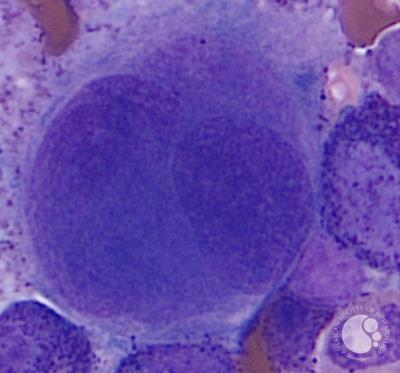
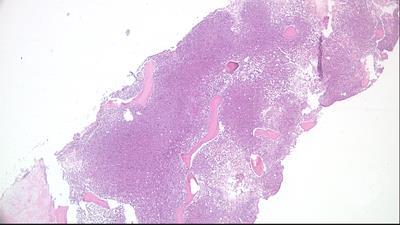
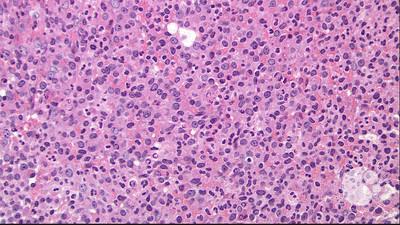
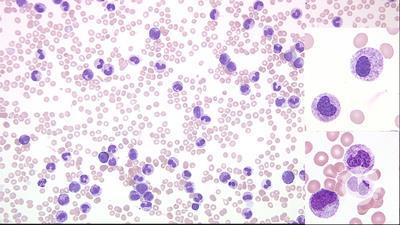
A 32-year-old man was diagnosed with Philadelphia (Ph)-like B-cell acute lymphoblastic leukemia (B-ALL) characterized by 46,XY[20], IGH::CRLF2 rearrangement, IKZF1 deletion, and mutations in JAK2, PTPN11, and ETV6 p.L416Cfs∗5. At diagnosis, conventional cytogenetics, fluorescence in situ hybridization (FISH), and reverse transcription polymerase chain reaction (RT-PCR) studies were all negative for BCR::ABL1 fusion. He was refractory to induction with a pediatric-inspired regimen but achieved complete remission following consolidation. Subsequently, he underwent haploidentical hematopoietic stem cell transplantation; however, he experienced marrow relapse 8 months posttransplant with IGH::CRLF2 rearrangement (panel A [Wright Giemsa stain, original magnification ×1000] and panel B [hematoxylin and eosin stain, original magnification ×200]). He subsequently enrolled in a clinical trial using CD19-targeted immunotherapy. After initiating treatment, next-generation sequencing and conventional cytogenetic analysis revealed the presence of BCR::ABL1 fusion, which was confirmed as p190 by quantitative RT-PCR at 44% and FISH studies at 99% (panel C). IGH::CRLF2 rearrangement was detected by FISH at 82% (panel D). Cytogenetics showed 45,XY,del(1)(p22p13),del(5)(p15.1),+8,dic(8;17)(p11.2;p11.2)×2,del(9)(p22p21.2),t(9;22)(q34.1;q11.2),inv(10)(p13q25),˗15,+17,del(18)(q21.1),der(20)t(15;20)(q11.2;q13.3)[20]. He was also found to have CDKN2A/B and IKZF1 deletions and ETV6 p.L416Cfs∗5 mutation. Despite ongoing therapy on the study, disease progressed and he was removed from the trial to initiate tyrosine kinase inhibitor (TKI)–based treatment. Unfortunately, before TKI therapy could begin, he developed septic shock secondary to necrotizing fasciitis and died.

Acquisition of the Ph chromosome is a rare event. However, its recognition is critical to broaden therapeutic options for relapsed B-ALL.

For additional images, visit the ASH Image Bank, a reference and teaching tool that is continually updated with new atlas and case study images. For more information, visit https://imagebank.hematology.org.

Advertisement intended for health care professionals